I require a good hard shove to declutter these days, my friends! Always something else to do—I am a master procrastinator.
I wonder what I was doing before with the six hours a week I now spend in the pottery studio? Maybe cooking, possibly cleaning, or just keeping up with life—emails, etc? It was definitely not keeping my house from getting overrun by *stuff*.
The last month or so found my mind laden by time management and tasks, namely packing the house for new carpet, then traveling abroad, to the point where this past week I was finally taken down by some ambient virus, opportunistic little bugger. But as I climb out from illness a new energy emerges, one that breathes easier now that the carpet is installed and I can move back into my spaces with intention and organization.
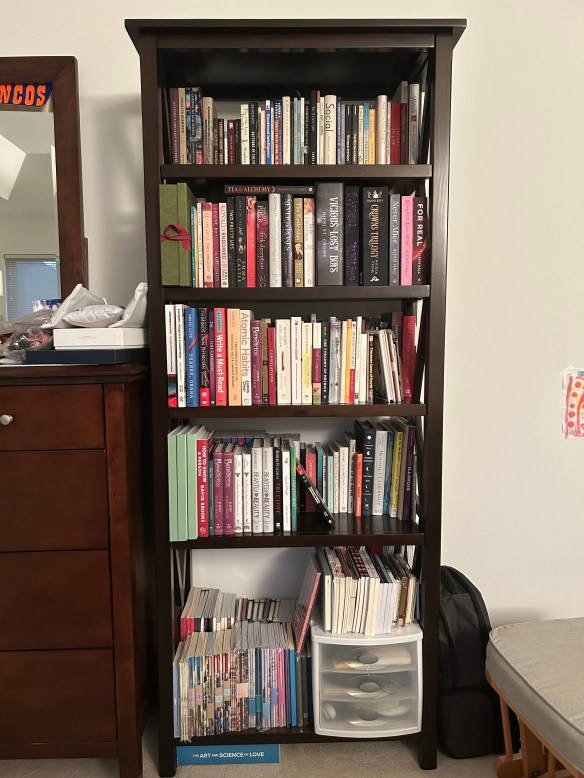
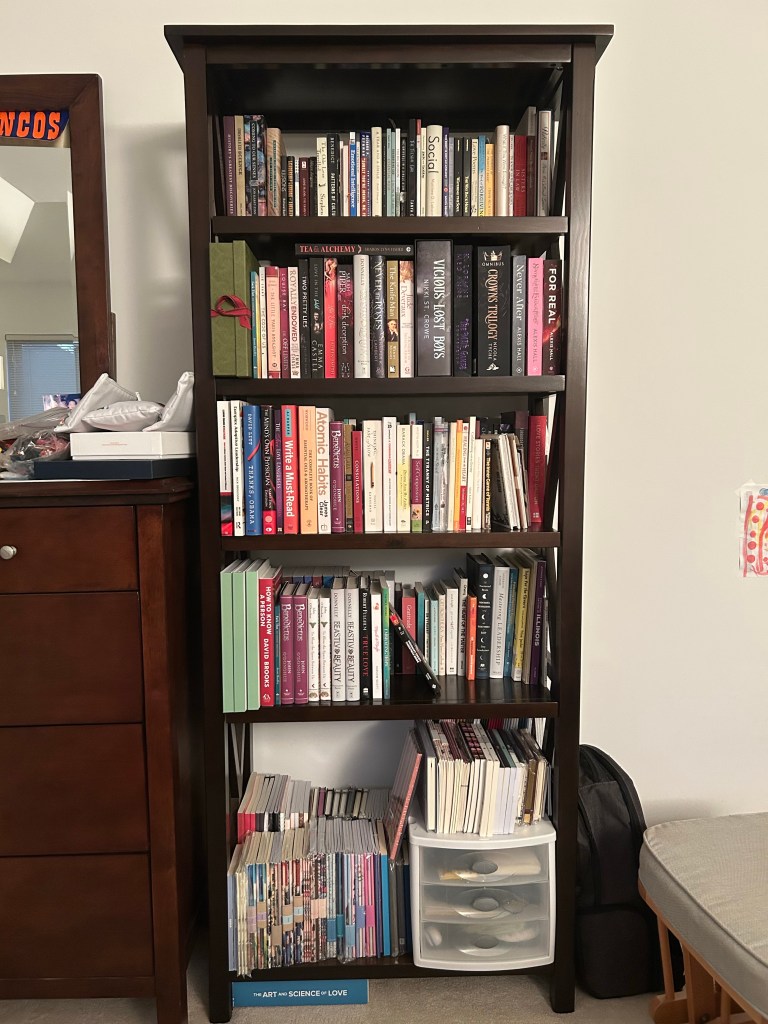
It’s too embarrassing to show the before photos; suffice it to say my house has been *dense* for many years. I took a carload of stuff to Goodwill a few weeks ago, and there is at least another half load accumulating. I think my nervous system has relaxed significantly since getting my closets out of the bathtub and books back on the shelf today. The latter now bears a cohesive organization for the first time in years. *sigh*
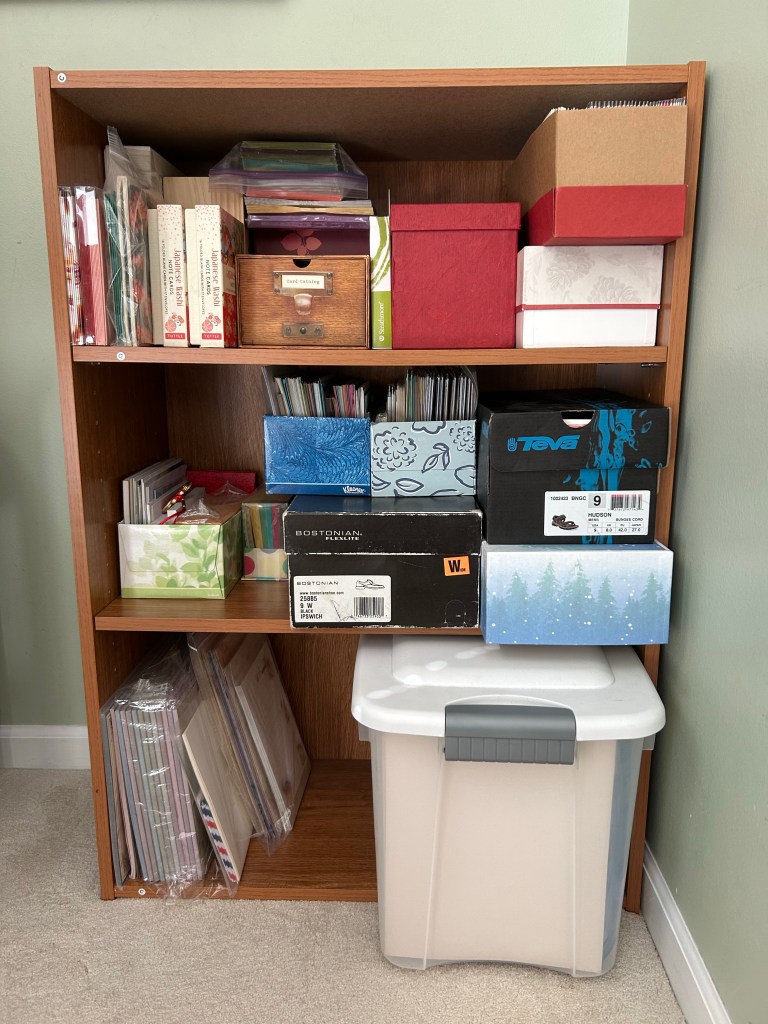
All my stationery in one place.
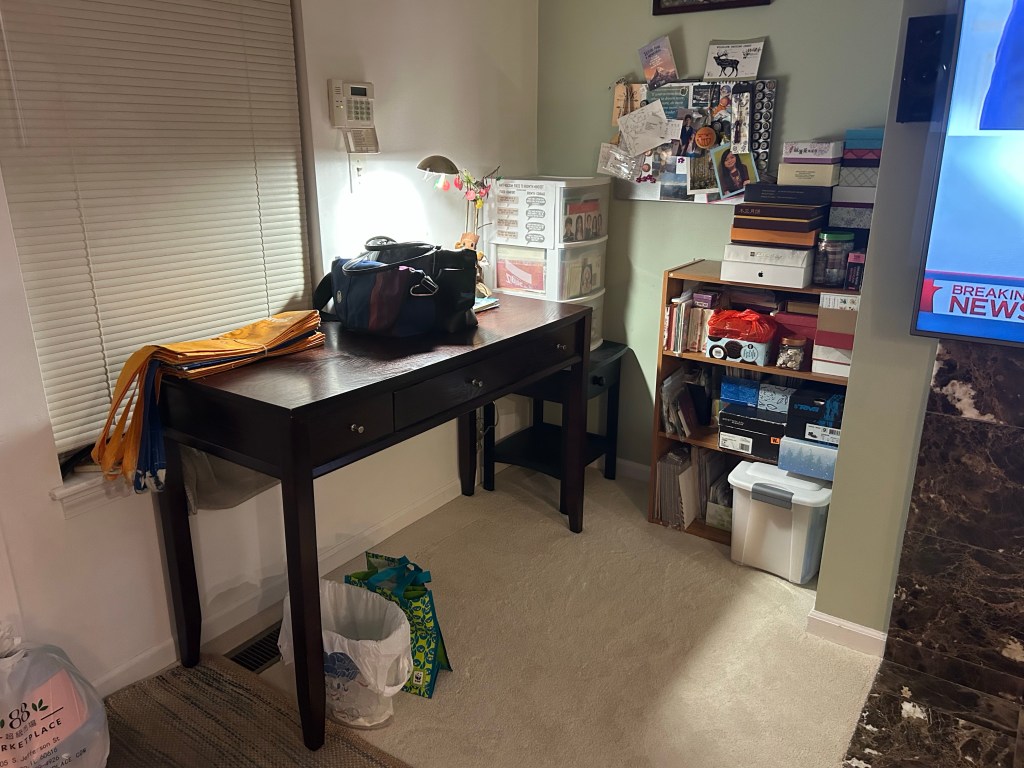
The first thing that called to move back, however, was my stationery. In excavating my prior spaces I discovered packets of it squirreled away everywhere, and I took the time to box it up together so I’d know exactly where to find it all. I felt positively giddy to unpack it onto that empty shelf right next to the desk that had been too buried to use. Then I moved all of my washi tape boxes on top, and my craft drawers back in place, and voilà, now all I want to do is sit and write snail mail.
Snail mail central
It will be some weeks before the whole place is back to full operational status. I’m confident I can get there steadily, and the journey will be at least as rewarding as the outcome. Come to think of it, I’ve been clearing space and opening more than just floors and closets lately. Money, emotions, and relationships are all getting a good evaluation and adjustment, all in refreshing and reinforcing ways. Pottery has reignited some creativity as well as stimulated openness to trying new things in a safe and familiar setting.
We live in our stagnation because it’s the status quo, no? It’s organic and insidious, just happens. I could have continued living in that state indefinitely, I think. And it has certainly cost me to disrupt and reorganize it. But it’s already worth the time, attention, and energy (physical, emotional, and relational) spent. The challenge now will be to establish and maintain a new, more mindful and intentional environment that reflects how I want to show up to myself and my life.
Clearing space. Opening. Reorganizing. Oh, this could be good and big.
“I think we could all encourage one another to acknowledge and articulate our gifts more. That could make the world better.” I wrote this to JP Greene, @typewrittenlovenotes, in response to his story reel describing his gift of acute and specific memory.
I traveled to Portugal this past week to attend the wedding of two of my favorite young people. What a gift and privilege, and a memory I will treasure lifelong. Not only did I get to spend enough quality time with both bride and groom, but I got to meet their and their parents’ dear and loving friends, and came home having made a bunch of new friends myself.
The event included multiple opportunities to reminisce and reflect on the newlyweds’ roots, personalities, and relationships. The ceremony and vows represented them both so earnestly and exquisitely. Their honest and authentic natures clearly present to us all right up front and consistently, as every description of them from the best mates to parents were exactly the people we all know and love, all why every one of us was willing to fly over an ocean to celebrate their marriage.
How often do you hear from others about your gifts? How often do you exercise them in both confidence and humility?
How often do you express your appreciation of others’ gifts to them? How often do you notice yet stay silent?
When we reflect others’ gifts and impact back to them, specifically and in real time, we reinforce what we love most about them. We validate and strengthen their self-awareness and self-worth. When we notice someone making a positive difference in the world, acknowledging it amplifies the effect and helps us all absorb and integrate that energy better. I believe we are more likely ourselves to act in kind thereafter–it’s a win-win.
This week, I challenge us to practice.
Articulate our admiration with assertive positivity. To be clear, we must be genuine and honest–actively responsive in and to our observations. It need not be effusive, per se, just earnest and direct. If it feels uncomfortable, may we muster the boldness to overcome the discomfort (maybe explore it?) and connect despite it. Sincere compliments make us generous on the receiving end; they can someone’s day, which brightens our own day. I think we consistently underestimate the vast and beneficial ripple effects of a few kind and encouraging words.
May we make one another feel seen and appreciated, my friends. May we openheartedly point out others’ gifts to them, and help them self-acknowledge. Far from stoking egoism and arrogance, I think we will simply call forth our best selves for one another and for the world. Imagine what a better society we could build this way?
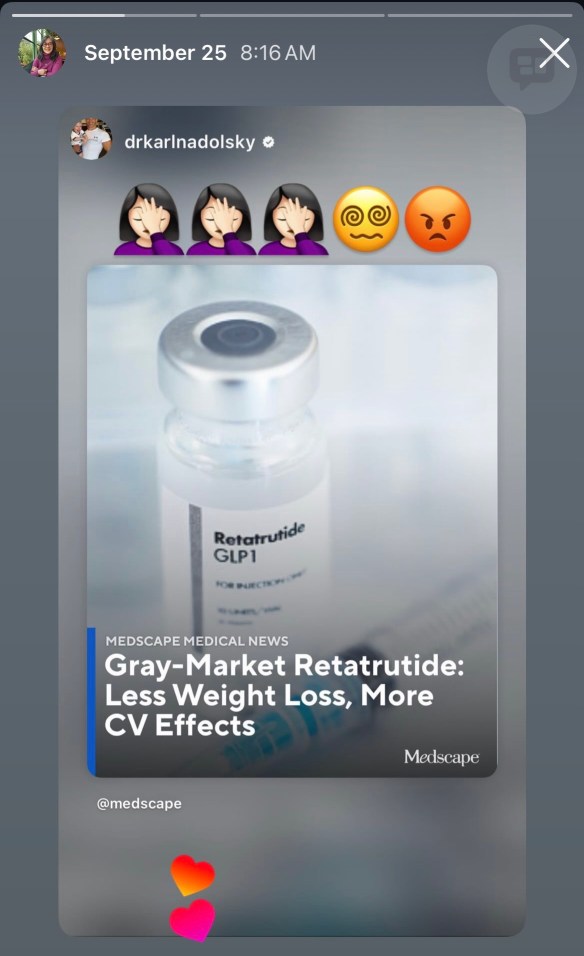
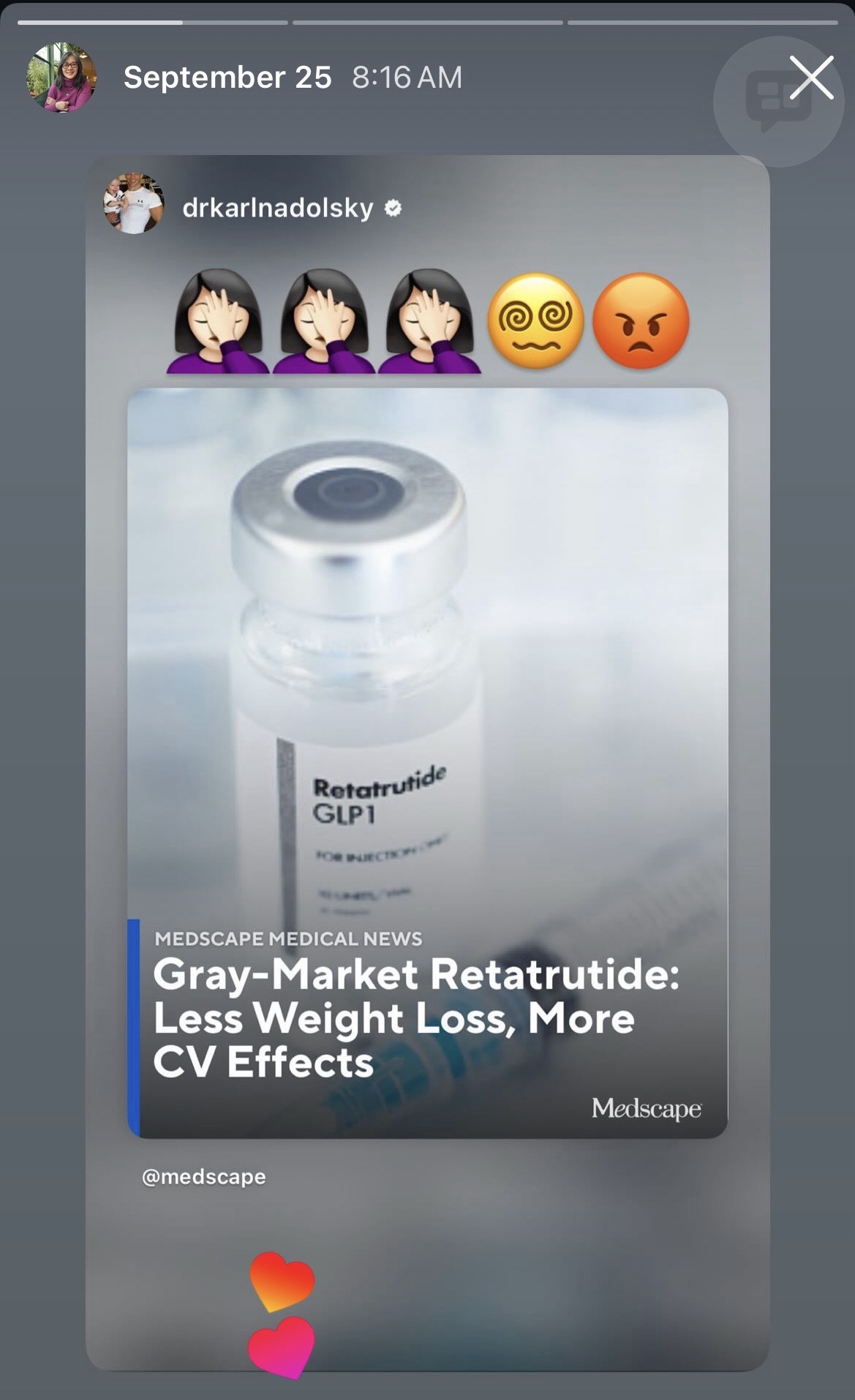
Caption from the Medscape Instagram post in the photo, which I re-shared on my stories: “Patients who use gray-market retatrutide seemed to achieve roughly half the expected weight-loss benefit relative to Eli Lilly’s clinical trials of the drug, while still experiencing high rates of cardiovascular effects, researchers reported in a preprint study. “At this time, retatrutide isn’t approved by the FDA and is in phase 3 clinical trials. The company has announced plans to submit for drug approval in first quarter 2027. However, demand for the triple-agonist has surged. Read more about the research by tapping the link in our bio.” Read the Medscape article itself.
Ooo, lots to discuss here friends! Let’s see if I can be thoughtful, informative and concise! I’ll give a brief summary of the Instagram post referenced above, implications I see as a physician, and my conversation with Friend who actually tried retatrutide from the gray market.
Retatrutide represents the next generation of medication for metabolic conditions like diabetes and obesity, and it shows tremendous effectiveness for the latter. In a phase 2 trial published in 2023, the vast majority of study participants lost at 10-15% of their body weight on the highest doses. Interestingly, about a quarter of patients taking placebo also lost 10%, and also experienced a noticeable amount of side effects–but that’s for another post. One phase 3 trial showed just under 2% decrease in hemoblobin A1c (the three month average blood glucose test, which we follow in patients with diabetes, and 2% change is significant) and 15% decrease in body weight at the highest dose.
The study (yet unpublished) referenced in Medscape is fascinating: nference, an AI company that works with clinical entities to convert medical records to de-identified data, mined clinical notes for signs that patients were using retatrutide, even though it’s not FDA approved and cannot be formally prescribed (and thus not yet monitored or tracked in any accountable way). Some exerpts:
“Unlike most retrospective observational studies, which start from a prescription or pharmacy claim, the researchers used large language models and de-identified electronic health records (EHRs) from US academic medical centers and health systems to capture the complete clinical note history of patients taking retatrutide.
“’Retatrutide isn’t an approved product, so it has no national drug code, no pharmacy claim, and no structured prescription record anywhere in the health system,’ Soundararajan explained. ‘Evidence about who is taking it exists only in the physician narrative in the form of free text in clinical notes.’
“Using the nference AI platform, the researchers retrieved the full clinical-note history for every patient whose record mentioned the drug and adjudicated three outcomes: whether the patient actually took the drug; where they obtained the drug; and when they started taking the drug. A clinician manually re-reviewed 320 randomly sampled extractions against the source notes. Exposure classification was 99.8% accurate and supply route was roughly 90% accurate.
“Analyses showed a rapidly increasing use of nontrial products purported to contain retatrutide, with a 1.8-fold increase per quarter from October 2023 through March 2026.
“Weight loss among the 89 retatrutide trial participants was 15.5% at 6-12 months, closely approaching the observed 16.9% mean weight loss across the retatrutide and placebo arms at 80 weeks after treatment initiation in TRIUMPH-1-4 (weighted average).
“In contrast, compounded retatrutide users lost 7.2% body weight at 6-12 months, less than the 15.5% observed in the retatrutide trial cohort and comparable to the weight-loss achieved among matched tirzepatide users (7.7%).
“A significant increase in heart rate was observed at 3 months for both the retatrutide trial cohort (+4.3 beats per minute [bpm]) and the compounded retatrutide cohort (+2.5 bpm), which was not seen in the matched semaglutide or tirzepatide cohorts.
“The retatrutide trial cohort also showed numerically higher, but not statistically significant, rates of three-point major adverse coronary events (MACEs) vs matched tirzepatide users (relative risk [RR], 1.77) and semaglutide users (RR, 1.02), with similar findings for expanded MACE vs tirzepatide (RR, 2.03) and semaglutide (RR, 1.25).
“Limitations included the observational nature of the study, which precludes proof of cause; short and uneven follow-up (median roughly 3 months in the retatrutide arms vs 6 months in comparators); and index dates derived from notes rather than dispensing records.”
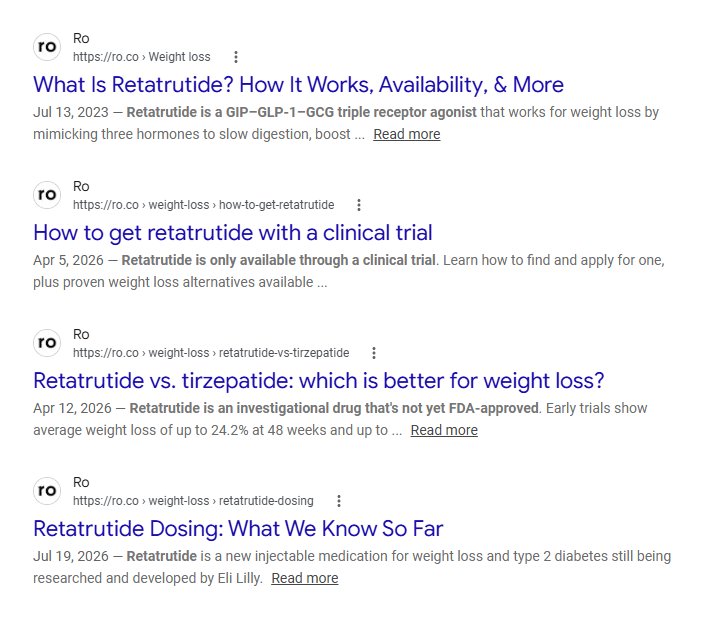
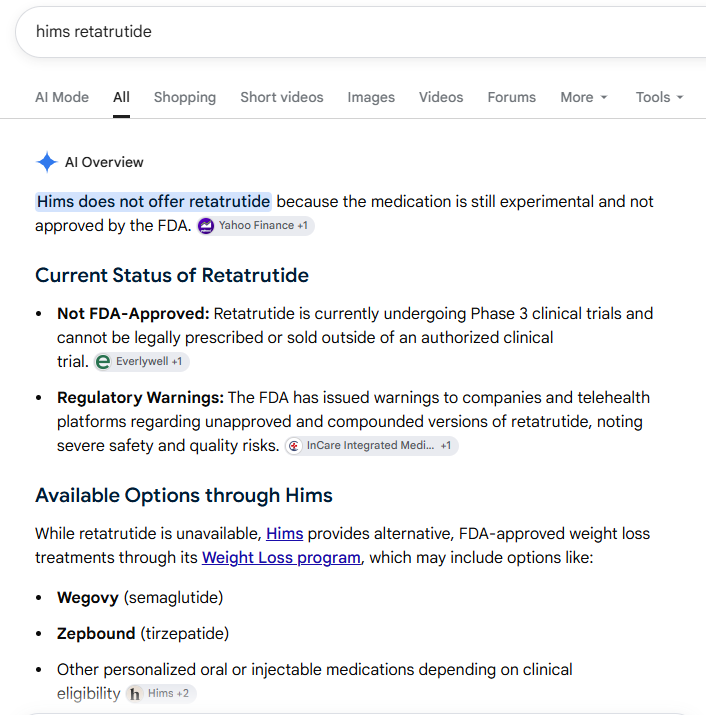
See below for screen snips of results from my Google search, “get retatrutide online.” Online pharmacies like HIMS and Ro, which provide compounded versions of FDA approved weight loss drugs, do not provide retatrutide. Most of the hits were peptide sellers, though platforms like Ro and Midi look like they give information on how to seek the medication through research trials.
I spend an increasing proportion of my practice discussing and dispelling medical misinformation. It eats all kinds of time, but I welcome it because I learn so much, and my practice is sturctured such that I have the time, which most doctors do not. I learn what my patients are seeing, hearing, and thinking. We look up evidence together, and I get to explain how I vet information: sources, physiology, rationale, conflicts of interest, meaningful outcomes, and the balance of benefit, cost, and risk. We learn together and I earn trust. My perspective shifts and I gain flexibility while hewing close to strong medical ethics and high academic and public health standards. I was both interested in and validated by Dr. Karl Nadolsky’s Instagram story, so I shared it.
My gym friend commented, “Let’s chat about this,” and now blog readers and I all get to benefit from the follow up. Friend has agreed for me to share our conversation with a few key quotes here.
Friend: “I tried grey market Reta and had zero results. zero. 16 weeks, titrated up doses. Actually gained weight and body fat. Mentioned it in a few body building and CrossFit forums and others had similar results with the Chinese labs products like Reta. Turns out, from those who sent the products out for lab testing, that there’s enough of the product in the vials to show that the actual chemical formula is present, but it’s severely underdosed to what they’re selling… The TRT [testosterone replacement therapy] clinics are selling Reta for over $300 for a 3ml vial of 15mg/ml. That’s down from $750 a few months ago. The Chinese grey market sells them for $35-$50 per vial. So gym bros, who are already spending on memberships, protein, supplements, and testosterone see the cheap prices and jump on them… One of the more popular online forums for gym bros is called “steroid source talk”, and there is where thousands of contributors share results and product reviews. There’s even links to vendors that have proven to have decent quality product.”
Let’s take a moment here. What do we notice in ourselves when we read this? What assumptions do we make, and what do we judge, especially?
Whenever I talk with a patient or friend about these things, especially someone with first hand experience, my attitude softens significantly. It’s not unlike my conversations with Red voting friends. I have my biases and convictions about public health, evidence-based medicine, affordable healthcare, etc., and they have theirs. I also care a lot about connection and relationship, which only occurs with openness, curiosity, and humility on both sides.
I messaged my friend, “It’s all so fascinating. I’m so interested in the motivation, the drive to seek these things. What’s at the heart and bottom of it, what need does it meet? Our culture is evolving so fast and so much of it feels mindless and numbing to me, like the worst of human nature is behind the wheel (collectively) too often.”
He answered, “Follow the marketing, in my opinion. It targets a specific demographic. Middle aged men, who work out tirelessly, are fathers, business owners, husbands, and are simply frustrated and aggravated with their current progress or results. They’re lifting weights constantly and not getting stronger. They’re dieting daily, tracking macros, eating whole organic foods, but are still appearing soft, and aren’t shedding stubborn fat that would come off easily in their 20s or 30s. The marketing is targeting a specific population demographic that has a ‘problem’, …self-perceived or not, and offering a ‘solution.’ …These men… are essentially desperate to see better progress, and (the companies) prey on that vulnerability. One of the most successful clinics in Chicago uses the phrase ‘get your mojo back’ on all their ads.”
Me: “…I’m thinking it’s similar for women…cultural expectations and pressures to stay young, beautiful, etc. *sigh*” [And now that I re-read, this intersects with last week’s post about pathologizing the normal, making women expect that they should not have to feel or experience the changes of menopause, that it can somehow be eradicated…] “I think our culture really fears aging and losing function. This intersects with how we don’t value our elderly, as if they have nothing to contribute. It’s all very complex and ties into our individualist, money-driven culture traits, too—very American, or at least Western. I often find myself comparing and contrasting this mindset with how I experience Chinese and Eastern culture, which is very much more respectful of elders and, in my observation, a lot less fearful of aging.”
In the end, my friends, what is truly worth our time, money, and energy? What do we want and what are we willing to spend, sacrifice, and risk to get it? At the end of life, what will really have mattered, and what will we look back on and wish we had let go or held onto better? What fears does the culture amplify for others’ (financial) benefit? How can we each and collectively resist such nefarious actors, and be ourselves agents of integrity, connection, wellness, self-efficacy, and grace?
I never expected that sharing an Instagram story would provoke such a dive into emerging pharmaceuticals and their ‘gray market’. But I’m not at all surprised that it opened a respectful and connecting conversation with a new friend. It reinforces to me the possibility and potential for connection in any forum, on any platform, if we are willing to engage humbly as fellow humans. Let’s spend our precious time, energy, and resources more intentionally on one another, yes?
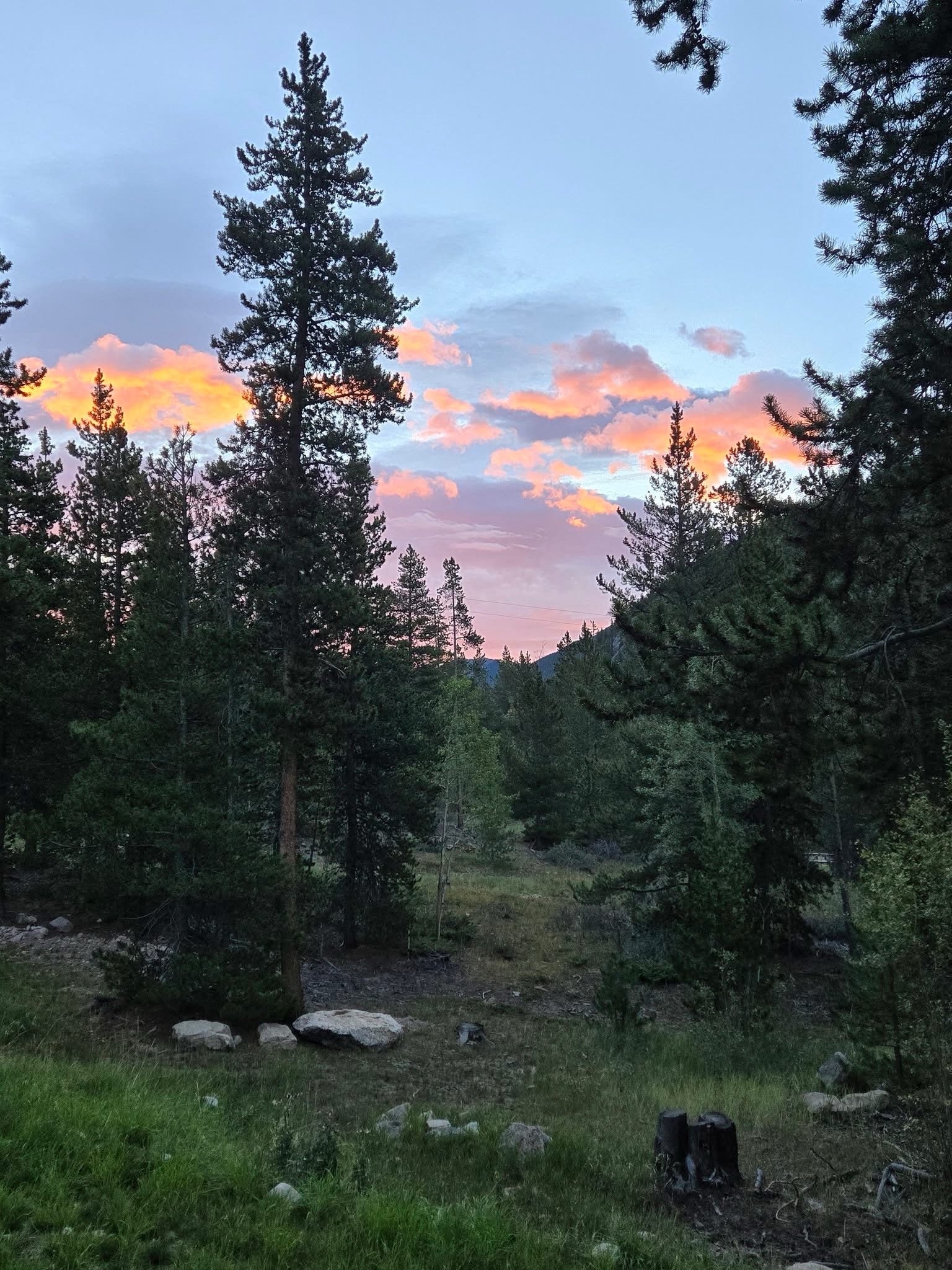
Photo courtesy of J. Stahlhut, September 7, 2026, near Georgetown, Colorado
What changes move you today?
It’s leaf peeping season in the Rockies; I will go eagerly back to Summit County, CO next weekend for aspens and friends–can’t wait! Hoping to get lots of photos to use here in the coming weeks. This is my 799th post–let’s see what I can capture for #800!
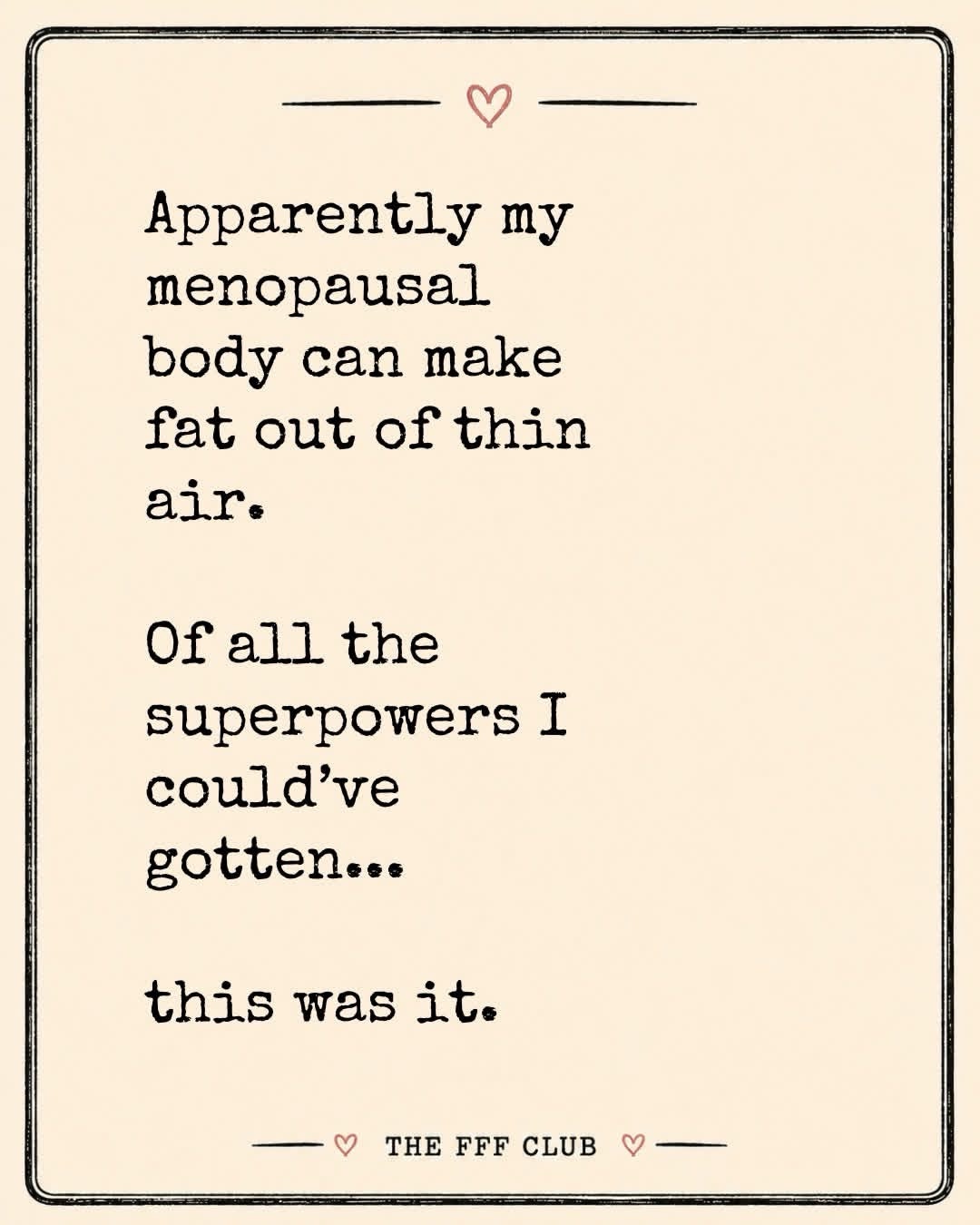
This made me laugh while scrolling Facebook today:
Baaahahahahaaaa TRUTH ;P
Summer to fall, youth to maturity. The Fourth Turning. Everything changes. How do we meet it all? What choices do we make?
Hubs decided this summer that we will replace the carpet in the whole house. The kids dutifully cleared their rooms before going back to school–it looks so sad, like they’ve moved out. My mental load increases the closer we get to installation, as 90% of the stuff in the rest of the place is mine and I must now clear 20 years of living off the floor and out of the closets–big lift for packrat me. I know I will be happy when it’s over and the process has already illuminated so much, for better or worse. I am who I am, have been so forever, with remarkable consistency, o.m.g. But after this project I may likely reorganize and reset, decluttered and refocused. Looking forward to it (but I’ll complain about it in the meantime). Makes me think about other things that are the same and also changing–my favorite paradox.
What have you noticed about menopause lately? I bet you hear or see something about it a lot more often now than ever. I wrote my most focused piece on it two years ago this week, which I still share with patients, but I really need to update it, as the landscape around this life transition has itself shifted significantly even since then. It’s still great that women’s health gets so much more attention and discussion now, no question. We have also swung well into pathologizing the normal in a lot of spaces, where unqualified influencers make money by sowing fear and mistrust of legitimate medical science and doctors in women of all ages. It’s all part of a larger societal transition, no? Social media has given everyone equal access to express and sell anything on various public platforms with little if any accountability. Menopause is a vastly different social experience now compared to even five years ago, let alone a generation.
Speaking of which, how is Gen X menopause different from that of our mothers? For many of us it hits when our kids are about a decade younger than we were when our moms went through it. We had much better access to birth control, and many of us delayed childbirth while getting our careers off the ground. So while our moms’ menopause happened after we were off at college or beyond, we’re going through it with teens and kids still at home–a very different, and I would argue more difficult, scenario. We are also the largest generation of working moms, primary breadwinner moms, and executive moms. We will or have hit our professional pinnacle around middle age, many in male-dominated fields, right when our adolescent kids’ brains and behavior devolve into chaos and our own bodies stage the second most significant physiologic revolution of our lifetime. Oh and don’t forget that our parents are also in their seventh or eighth decades of life, another pivotal transition that we also attend.
So to my fellow perimenopausal sisters: Holy moly, we are HEROES! Not only are we living every day in our own involuntary bodily transitions, but we’re doing it in a period of social and generational transition that is more complex than any timeframe to date. If you’re reading this and you have a woman leader anywhere in your life (and believe me, you do, even if she doesn’t have a formal title or designation), just thank her now. She’s holding all kinds of shit together and probably making it look easy.
What other monumental transitions do you observe now? What transformations? As we move from summer to fall in the Northern Hemisphere, entering the season of harvest and impending equinox, how do we feel and what do we need?
Multiple coincident and intersecting transitions can feel like a maelstrom. Can we find a quiet and stable center within it? Can we cultivate that dynamic balance that allows us to move more fluidly, with less friction and drag through it? What serves as our rudder, that which reliably stabilizes us on our life course, despite the inevitable weather changes? I know what mine are, and writing this post helps me reidentify and reinforce them.
Everything changes. Some things remain the same. May we always maintain clarity about the paradox of both, and exercise our agency to transition ever toward our most aspirational selves in each phase of life.
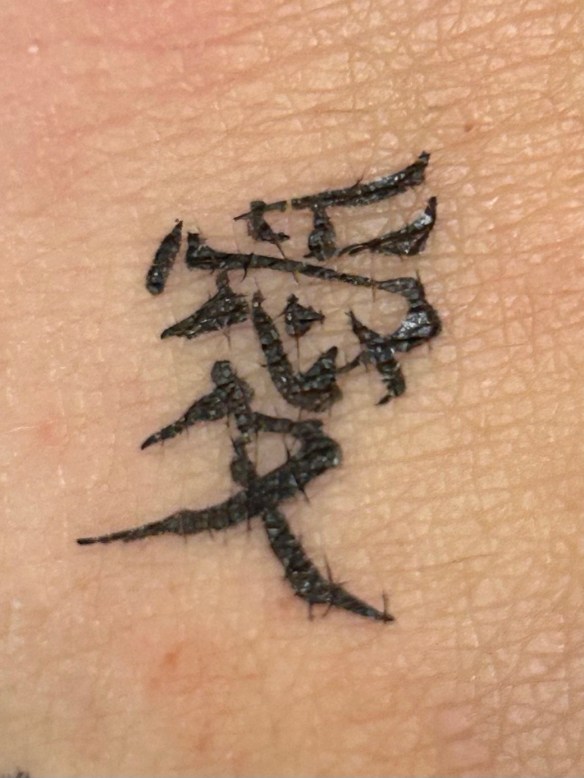
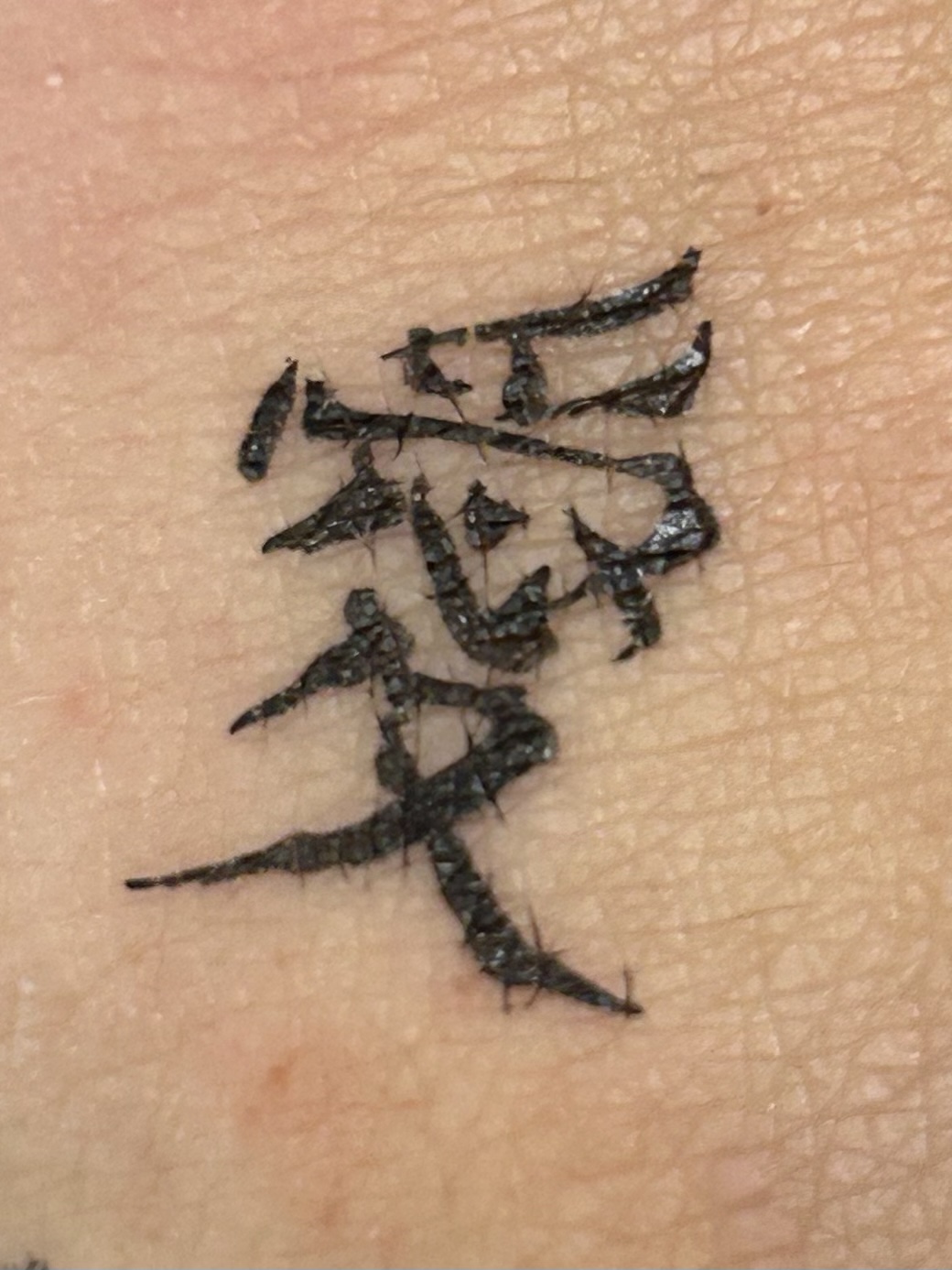
愛 Love, written by me in eyeliner brush pen on Daughter’s hand
“…the medial aspect of my proximal left anterior forearm…” –Me, describing where I would place the tattoo of my matrilineal surnames to Daughter.
What languages do you speak?
I speak American English and Mandarin with a Taiwan 外省人 accent. I am fluent in both but only literate to an early primary school level in the latter. In a previous medical practice I had so many Spanish speaking patients who were willing to teach me, that by the time I left if the patient knew a little English and the problem was not too complicated, I could get through an entire clinic visit without an interpreter. I had a long chain of Post-It notes in my office of words and phrases they had taught me.
Son and Daughter grew up with internist and orthopaedic surgeon parents so they speak a little medicine. Daughter spent five weeks learning archeology and osteology this summer, so her fluency in anatomy has improved–hence my description above. It’s just the most efficient and accurate way to describe the body part. Quick tutorial: –Closer to central mass of body is proximal, farther is distal. –Orienting left/right, closer to center is medial, farther away is lateral. For the hands, anatomical position assumes palms facing forward (anterior), so pinky side is medial, thumb side is lateral. –Front of body is anterior, back is posterior. –Closer to the head is superior; closer to the feet is inferior. –Ventral is belly side, dorsal is back side (so back of the hand is dorsal but weirdly, top of the foot is also dorsal–which those fluent in anatomy already know!). –Rostral is toward the head, caudal is toward the sacrum (tail).
How fun to talk shop with my kid!
It got me thinking again how bonding it is to share jargon. Consider any profession. We can go anywhere in the world and assume we can work with anyone in our field simply because we all speak the language of our discipline. It’s a built-in connection that precedes our acquaintance, that bridges other language and culture barriers. How cool is that!?
It all made me wonder what other languages I speak. Here is a partial list, in rough order of verbal fluency: Medicine (especially internal medicine and orthopaedics) Biology Chemistry (organic more than others) Exercise/fitness Nutrition Volleyball Mahjong Pens Paper/stationery Writing Psychology Romance Bread/sourdough Audiobooks Pottery
I also speak Relationship. I am highly fluent and literate verbally. But this language calls for and forth our greatest capacity for nonverbal communication, no? Huh. I love that.
Wanna know what languages I do not speak? This was fun to list too: Sports other than volleyball (though I did learn once how to spot a moving pick in basketball) Makeup Skincare Music (though I appreciate it greatly) Pop culture Fashion (though Daughter has taught me much about classic designers) Money/finance
Aside from a lighthearted and fun reflection on Sunday afternoon while procrastinating housecleaning, the intersecting concepts of language, communication, and connection just make me shake my head in awe and wonder. How many more languages could I learn in this lifetime? I am convinced this is how people stay young and live longer: lifelong stimulation and learning, connection with and integration of the novel and interesting that brings us closer to our fellow humans. It could be anything!